%20(1).avif)
.avif)

.svg)
.svg)
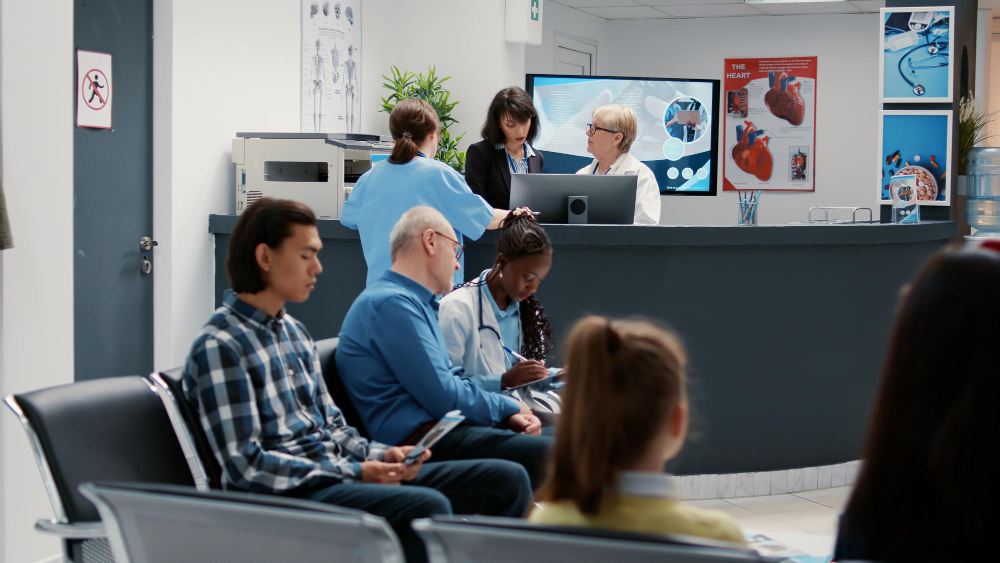
At 8:30 in the morning, the phone rings.
A patient wants to know whether their GP is working today.
Another caller asks where to park.
Someone needs to move tomorrow's appointment.
A parent wants to know whether the clinic is open on Saturday.
Another patient asks whether a doctor offers Telehealth.
None of these questions is particularly complicated. The problem is what happens when they arrive at the same time as a patient standing at the front desk, a doctor asking reception for help and another caller who genuinely needs a staff member to investigate something.
For many GP practices, telephone pressure is not created by one difficult interaction. It is created by dozens of small, predictable enquiries competing for the same receptionist's attention.
Before introducing an AI GP receptionist, it is worth finding out exactly what your team is answering all day. The best opportunities for automation are often hidden inside the questions staff have become so accustomed to answering that nobody thinks to measure them anymore.
Start by Listening to the Calls Your Team Considers “Normal”
Reception staff rarely describe answering opening-hour questions as a major operational problem.
Each individual call might take less than a minute.
But repetition changes the equation.
If patients regularly ask the same ten, fifteen or twenty questions, the cumulative effect can be substantial. Every call interrupts whatever the receptionist was already doing, whether that is checking in a patient, processing paperwork, speaking with a doctor or resolving another appointment issue.
Australian reception staff discussing their work describe situations where they are simultaneously supporting several doctors, answering continuously ringing phones and assisting patients physically waiting at the desk.
That is the context in which apparently minor calls become important.
Instead of beginning with the technology, practices can start with a simple reception audit.
For one or two typical weeks, record why people call.
The purpose is not to document every conversation in detail. It is to identify patterns.
You may discover that a significant percentage of calls fall into a small number of categories.
Which Questions Keep Coming Back?
Every GP clinic will have a slightly different mix, but routine telephone demand commonly includes questions such as:
- What time do you open?
- Is Dr Smith working today?
- Do you have anything available this afternoon?
- Can I move my appointment?
- Can I cancel tomorrow?
- Does the clinic offer Telehealth?
- Do I need a long appointment?
- Are you taking new patients?
- Does this doctor see children?
- Where is the clinic?
- Is there parking nearby?
- What should I bring to my appointment?
- Do you bulk bill?
- Which doctors are available this week?
- Can I book with my usual GP?
- I missed a call from the clinic. What was it about?
- Can I change from face-to-face to Telehealth?
- Is the clinic open on public holidays?
- Can I make an appointment for a family member?
- Can you send me the booking details again?
Some of these questions can be answered automatically when the practice has clearly defined information and booking rules.
Others look simple initially but become more complicated once the patient's circumstances are known.
That distinction is where the real value of the audit begins.
Sort the Calls Into Three Buckets
Rather than asking whether “reception calls” can be automated, divide them according to the amount of judgement required.
Bucket 1: Predictable Information Requests
These are enquiries with a stable answer.
Examples might include:
- clinic opening hours
- location
- parking instructions
- whether the practice offers Telehealth
- basic billing-policy information
- whether a doctor generally works on a certain day
These are usually the simplest calls to automate because the answer is based on known practice information.
The main requirement is accuracy.
If opening hours, practitioner schedules or policies change, the automated system needs to reflect those changes promptly.
Bucket 2: Routine Administrative Actions
These calls involve doing something rather than simply answering a question.
They may include:
- making an eligible appointment
- cancelling an appointment
- rescheduling
- confirming an existing booking
- checking permitted availability
- directing the patient to the appropriate standard appointment option
This is where integration and practice-specific rules become more important.
An automated receptionist should not simply know that a 10:30 appointment exists. It needs to know whether that appointment can actually be offered to that caller.
Bucket 3: Calls That Need Interpretation
These are the conversations where automation should become more cautious.
Examples include:
- a patient who is not sure which appointment they need
- someone requesting a doctor whose books are closed
- a patient whose situation does not fit the standard booking rules
- a sensitive administrative matter
- a complaint
- an unusual continuity-of-care request
- a caller asking for clinical advice
- someone who explicitly wants to speak with reception
These calls may require a transfer, callback or staff review.
The objective is not to eliminate Bucket 3.
It is to reduce the volume in Buckets 1 and 2 so staff have more capacity when Bucket 3 occurs.
The Best Automation Opportunity May Be the Calls Nobody Notices
Busy practices usually notice obvious problems.
Missed calls show up on the phone system. Complaints get discussed. Reception queues are visible.
Repetition can be less obvious.
A receptionist may answer the same question about Saturday opening hours ten times without reporting it because answering that question has become part of the normal day.
The same can happen with:
- directions
- practitioner schedules
- Telehealth availability
- appointment confirmations
- cancellation requests
- basic preparation instructions
Each interaction feels minor.
Together, they consume attention.
This is why the first step in reception automation should often be measuring call reasons rather than asking staff whether they feel busy. The answer to the second question is usually obvious. The first question tells you where the workload is actually coming from.
For practices already examining broader GP practice marketing, this matters because increasing patient demand can amplify existing reception bottlenecks. More enquiries are useful only when the clinic has a practical way to handle them.
Online Booking Does Not Automatically Remove Phone Calls
A common assumption is that a clinic with online appointments should receive fewer booking calls.
Sometimes it does.
But patients call for reasons that a booking widget does not resolve.
They may want to know:
- which GP is appropriate
- whether their usual doctor is available
- whether a different appointment type is required
- why their preferred time is unavailable
- whether a booking can be changed
- whether their circumstances fit the online rules
Some people also prefer speaking rather than navigating a website, particularly when they are unsure what they need.
This explains why practices can invest in online booking and still experience heavy telephone demand.
The two systems solve different problems.
An online booking tool serves people comfortable completing the process themselves.
An AI receptionist for doctors can potentially handle conversational administrative requests from patients who choose to call, provided the system has appropriate rules and escalation pathways.
The aim should not be to force every patient into one channel. It should be to make each common channel more manageable.
Look for Repetition at the Busiest Times of Day
The same call has a different operational impact depending on when it arrives.
A two-minute enquiry at 2:30 pm may be easy for reception to handle.
The identical enquiry at 8:05 am can compete with:
- morning check-ins
- appointment changes
- doctors beginning sessions
- patients requesting same-day availability
- incoming pathology or specialist communications
- several other ringing lines
Australian reception workers frequently describe the difficulty of managing simultaneous demands rather than any single reception task.
Practices should therefore review call volume by both reason and time.
You may find that routine enquiries cluster heavily:
- immediately after opening
- around lunch
- near school pickup time
- before closing
- on Mondays
- after public holidays
That information can influence how automation is introduced.
A clinic may not need an automated system to take over the entire telephone workflow. It may initially be more useful as overflow support when demand exceeds the team's ability to answer.
Routine Does Not Mean Unimportant
There is a risk in describing these calls as low-value.
For the patient, they are not low-value at all.
Someone asking whether their appointment is confirmed wants certainty.
A patient checking whether the practice is open before travelling wants to avoid a wasted trip.
A caller asking if their doctor offers Telehealth may be trying to work out whether they can attend while managing employment, caring responsibilities or transport.
The information matters.
What makes the enquiry suitable for automation is not that the patient question is unimportant. It is that the answer can often be delivered consistently without requiring individual staff judgement.
This distinction should influence how practices design the experience.
An automated answer still needs to be:
- accurate
- understandable
- current
- relevant to the caller's question
- easy to escalate when necessary
Efficiency should never require making routine patients feel dismissed.
Reception Staff Can Tell You Which Questions Are Safe to Automate
Practice managers can review reports and call logs, but reception staff bring something different to the process.
They know which apparently simple questions frequently become complicated.
Ask the team:
- Which questions could you answer without looking anything up?
- Which calls follow exactly the same process every time?
- Which requests commonly require you to check with a doctor?
- What do patients misunderstand most often?
- Which calls create repeat contact because the first answer was incomplete?
- Which tasks interrupt you when you are helping patients at the desk?
- What would you happily never need to answer manually again?
- Which conversations would you never want handed completely to automation?
The answers help separate genuine automation opportunities from tasks that only look repetitive from the outside.
This consultation also gives staff a role in designing the change.
Positioning AI as something being imposed on reception can create understandable concern. Positioning it as a tool designed partly around the repetitive work staff themselves identify is a different conversation.
Watch for Calls That Create More Work After They Finish
Call duration does not tell the whole story.
Some reception conversations are short but generate additional administration afterwards.
For example, a receptionist may:
- Answer the caller.
- Search for the patient's record.
- Check several doctors' schedules.
- Change the booking.
- Add a note.
- Send confirmation.
- Return to the task they were doing before the phone rang.
When practices analyse call demand, it helps to look at the complete workflow.
A three-minute telephone interaction might represent six or seven minutes of interrupted work.
This is particularly relevant when evaluating administrative technology as part of a wider digital strategy for healthcare practices. The goal is not merely to reduce conversation time. It is to remove unnecessary steps across the workflow.
Do Not Automate an Answer That Changes Too Often to Stay Accurate
Some questions sound ideal for automation but depend on information that changes constantly.
Practitioner availability is a good example.
Telling a patient that Dr Lee normally works Tuesdays is useful only if the system also knows whether Dr Lee is away, booked out or working an altered session.
The same applies to:
- public holiday hours
- new-patient availability
- billing arrangements
- appointment eligibility
- temporary service changes
- Telehealth rules
If the information cannot be maintained reliably, automating the answer may create more problems than it solves.
This is why GP reception AI should be connected to appropriate practice information rather than operating from a static list of generic responses.
When something cannot be answered confidently, escalation is preferable to giving an outdated response quickly.
Repetitive Calls Can Reveal Website Problems Too
Not every frequently asked question should necessarily be solved on the phone.
If dozens of patients call each week asking where the practice is located, parking instructions may be difficult to find online.
If people constantly ask which doctors are accepting new patients, practitioner information may be unclear.
If callers repeatedly ask whether Telehealth is available, the clinic website may not explain it adequately.
A call-reason audit can therefore uncover content gaps.
Improving medical website design and reception automation can work together.
The website can answer questions for patients who prefer self-service.
The AI receptionist can assist callers who choose the phone.
Human staff remain available when the request requires more than information retrieval or a standard administrative action.
Rather than viewing those channels separately, practices can design them around the same patient questions.
Give Routine Follow-Up Its Own Workflow
Reception pressure is not always generated by incoming calls.
Practices also contact patients for routine administrative reasons, including appointment reminders, confirmations and follow-up communications.
Some of those processes may already be automated through existing software. Others may involve staff manually sending messages, returning missed calls or following up people who could not be reached.
Mapping inbound questions alongside outbound communication can identify unnecessary duplication.
For example, if patients repeatedly call to confirm appointment details, clearer automated confirmation may reduce the incoming question altogether.
If patients frequently ask where to find forms before attending, including the information in the booking confirmation could prevent another phone call.
This is where patient nurturing and CRM automation can complement reception improvements. The best outcome is sometimes not answering the repetitive question more efficiently, but preventing the patient from needing to ask it.
What Should Stay With Reception?
After identifying the twenty questions your team hears repeatedly, the next step should not be to automate all twenty.
The useful exercise is deciding which ones can be handled consistently without removing necessary human judgement.
Keep human involvement readily available where the interaction involves:
- uncertainty
- sensitivity
- complaints
- unusual patient circumstances
- conflicting booking rules
- information the automated system cannot verify
- potential clinical decision-making
- explicit requests for staff assistance
AI should create capacity around these conversations, not make them harder to reach.
That is an important difference between automation designed for a GP practice and a generic answering service.
Measure What Changes After Automation
Once routine calls begin moving through an automated pathway, practices should compare the new workflow with the original baseline.
Useful measures may include:
- number of unanswered calls
- peak-hour call volume reaching reception
- common automated enquiry types
- appointments successfully booked or changed
- calls transferred to staff
- repeat callers
- booking corrections required
- reception interruptions
- average callback workload
- staff observations
- patient feedback
The goal is not simply to produce the highest possible automation percentage.
A practice where AI handles 60 per cent of appropriate routine requests accurately may have a better system than one that attempts to automate 90 per cent but regularly creates exceptions staff must repair.
The meaningful question is whether reception has regained capacity without making access more difficult for patients.
Your Call Log Is a Reception Workflow Map
Repeated questions are not merely interruptions.
They are data about where patients need information, where booking processes create uncertainty and where reception time is being consumed.
A clinic that records those patterns can make much more informed decisions about automation than one that starts with the assumption that AI should answer everything.
At Practice Boost, GP technology is considered alongside the wider patient journey, administrative workflow and practice growth strategy. For a busy clinic, the opportunity may not be replacing reception work. It may be removing enough predictable work that reception staff can give proper attention to everything that is not predictable.
If your team really is answering the same twenty questions every day, the first step is not asking how quickly AI can take over.
Write the twenty questions down.
Then decide which ones never needed a human answer in the first place.

.svg)

